
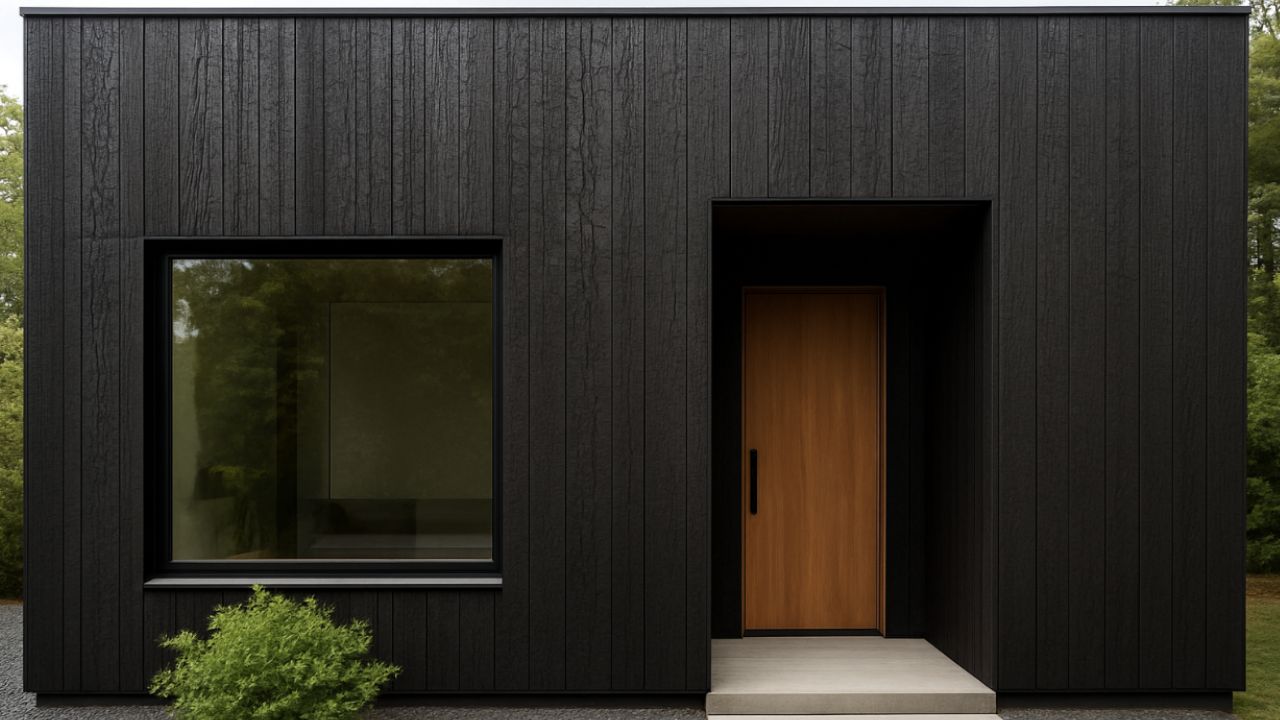
Among the most fascinating artisanal techniques in the world, Shou Sugi Ban (or Yakisugi) holds a prominent place. Originating in 18th-century Japan, this traditional practice consists of charring the surface of wood to protect it against the effects of time.
+ 10 items that make your home sick and how to heal it
Far beyond an aesthetic resource, the Shou Sugi Ban technique also provides strength, durability, and low maintenance to finishes.
How does the Shou Sugi Ban technique work?
Shou Sugi Ban is carried out through the controlled burning of wood, followed by brushing and, in many cases, the application of natural oil. This treatment creates a carbonized layer that acts as a protective shield against external factors.
The main steps include:
- Charring the wood – usually done with a torch or direct flame, until the surface becomes carbonized.
- Brushing – to remove excess loose charcoal and reveal the wood’s texture.
- Finishing – application of natural oil (such as linseed oil) to nourish and seal the surface.
Advantages of Shou Sugi Ban
In addition to its striking and sophisticated look, this traditional Japanese technique offers impressive practical benefits:
- Increased durability: the carbonized layer acts as a barrier against moisture, insects, and fungi, extending the wood’s lifespan.
- Low maintenance: unlike other finishes, it does not require frequent repainting or constant varnish applications.
- Sustainability: eliminates the need for harsh chemicals, making it a more natural and eco-friendly technique.
- Fire resistance: paradoxically, charred wood becomes less flammable since the burned surface acts as insulation against new flames.
- Unique aesthetics: the dark, elegant, and minimalist texture blends perfectly with contemporary designs, adding drama and sophistication.
Where to use Shou Sugi Ban?
Traditionally, the method was applied to the exterior cladding of Japanese houses to protect them against the humid climate. Today, the technique has spread worldwide and is used in:
- Residential and commercial facades
- Feature panels in interiors
- Custom furniture
- Ceilings, doors, and decorative elements
The versatility of Shou Sugi Ban allows combinations ranging from rustic to minimalist styles, making it highly valued by modern architects and interior designers.
A balance between tradition and innovation
Shou Sugi Ban proves that ancient traditions can remain relevant today. By combining function and aesthetics, this Japanese technique not only protects wood but also transforms it into a timeless design piece.
Whether in a bold architectural project or subtle decorative details, Shou Sugi Ban delivers beauty, strength, and sustainability in a single finish.
This content was created with the help of AI and reviewed by the editorial team.
